


New Song Book For Schools And General Use Part II
Publisher: Oxford University Press
Format: Paperback
ISBN: none
There are few titles more magnificently confident than New Song Book. Not A New Song Book, not Selected Modern Songs for Contemporary Enjoyment, but simply New Song Book — as if the matter had been settled by committee, stamped by authority, and sent forth to improve the nation one upright piano at a time.
Published in 1930 by Oxford University Press for the National Council of Music, this is exactly the kind of object Crappy Old Books was put on this earth to admire. It comes from that deeply earnest world in which music was not merely entertainment but a civic duty, schools were expected to sing in an orderly fashion, and a book could be designed to serve both “schools and general use” without anybody feeling the need to explain what “general use” might involve. Presumably: singing, but properly.
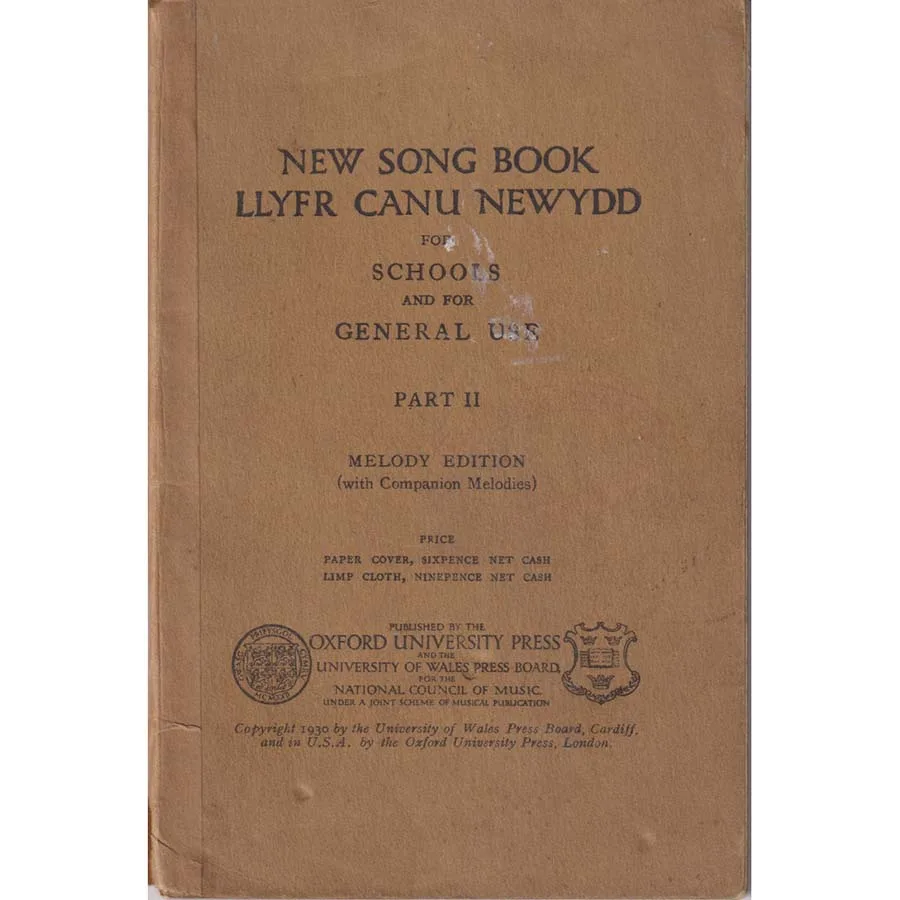
And what a cover. That plain brown wrapper has all the visual glamour of a ration booklet, which only makes it more charming. It does not seduce. It does not sparkle. It stands there with the calm authority of an educational decree. The bilingual title — New Song Book / Llyfr Canu Newydd — gives it an added air of official respectability, as though this is not merely a collection of tunes but part of a broader civilisational project. Somewhere in Wales, and beyond, this little book once represented culture, uplift, discipline, and the possibility that a room full of children might be persuaded to sing in time.
The phrase Part II is also rather thrilling. It implies a whole established musical universe already in motion, and you, lucky reader, have arrived at the sequel. Not just songs, then, but the continuation of songs. Melody Edition (with Companion Melodies) sounds even more marvellous — practical, precise, and faintly mysterious. There is something wonderfully old-fashioned in the idea that a songbook should calmly announce its melodic credentials as though this were all perfectly obvious business and the modern world had not yet descended into karaoke machines and Bluetooth speakers.
As sold by Crappy Old Books, this copy is in good condition, which is impressive for a 1930 publication that was plainly meant to be used rather than worshipped. A school songbook is not a delicate creature. It gets carried, opened flat, stacked in piles, shoved into cupboards, consulted in assembly halls, and handled by generations of people with varying degrees of enthusiasm for communal singing. To survive in good order suggests either remarkable care or a long career among the unusually dutiful.
And really, that is part of the delight. This is not just a book, but a surviving fragment of a lost social technology: the organised songbook. Before entertainment dissolved into earbuds and private algorithms, there was the modest but formidable idea that people should gather and sing the same thing together. In schools. In halls. At events. Possibly under the stern but loving supervision of someone who took tempo very seriously. This book belongs to that world, and it carries its atmosphere beautifully.
There is also a delicious irony in the word New. In 1930 it would have sounded brisk, modern, fit for purpose, perhaps even progressive. Now, nearly a century later, it has the slightly touching bravado of an elderly shop still calling itself “The New Café”. We at Crappy Old Books are wholly in favour of this sort of chronological cheek. A book does not cease to be new merely because ninety-six years have happened to it. It remains New Song Book by force of title alone, and frankly that is admirable.
For collectors, it is a lovely piece of musical and educational ephemera: Oxford University Press, National Council of Music, bilingual Welsh-English presentation, and that crisp institutional tone which modern publishing has almost entirely lost. For readers and browsers, it offers the pleasure of entering a world where committees believed song could shape character and where a slim brown paper-covered volume might sit at the centre of school life. For decorators of shelves, it has that quiet, archival charm that says, “I contain civilisation, but I won’t make a fuss about it.”
It is also the sort of book that rewards curiosity. Even before you open it, it suggests classrooms, chapel halls, school assemblies, village concerts, and a vanished confidence in shared culture. One can almost hear the scraping of chairs, the uncertain opening notes from the piano, and a roomful of children preparing to sing with varying levels of commitment. Some would have been angelic. Some would have been whispering. One or two would have been mouthing along in silent rebellion. The book, however, would have carried on nobly regardless.
So here we have a good-condition survivor from 1930: modest in appearance, grand in purpose, and gloriously unflashy in its determination to bring melody to schools and “general use.” It is a small brown monument to communal effort, musical improvement, and the age when publishers and councils still believed a nation could be steadied by the correct selection of songs.
New Song Book is not merely a book of music. It is a portable piece of educational Britain — or Wales, or both — from a world of assembly pianos, paper covers, sixpenny practicality and institutional hope. Crappy Old Books is delighted to offer this quietly magnificent relic to anyone who appreciates old songbooks, old schools, old ambitions, or simply the splendid confidence of a title that still insists it is new and dares you to disagree.
Keep browsing: See more Music books Other books by National Council of Music
